Route pressure
As shipping and fishing traffic increased in the 19th century, fog belts, reefs, and winter currents made a coordinated light network a practical coastal necessity.
An illustrated historical reference to the region’s lighthouse network, keeper stories, and preserved towers.
Historical introduction
From storm-led sea routes to modern heritage work, these lights connected mariners, weather knowledge, and shoreline communities across generations.
Route pressure
As shipping and fishing traffic increased in the 19th century, fog belts, reefs, and winter currents made a coordinated light network a practical coastal necessity.
Keeper labor
Keepers trimmed wicks, polished lenses, logged weather shifts, and carried fuel by hand—routine work that kept beacons reliable through long exposure seasons.
Preservation turn
After automation reduced staffing, selected towers were protected as heritage sites, preserving architectural records and local memory tied to maritime safety.
Visual archive
A curated selection of weathered towers, keeper vantage points, and shoreline records that show how these lights endured sea, wind, and time.
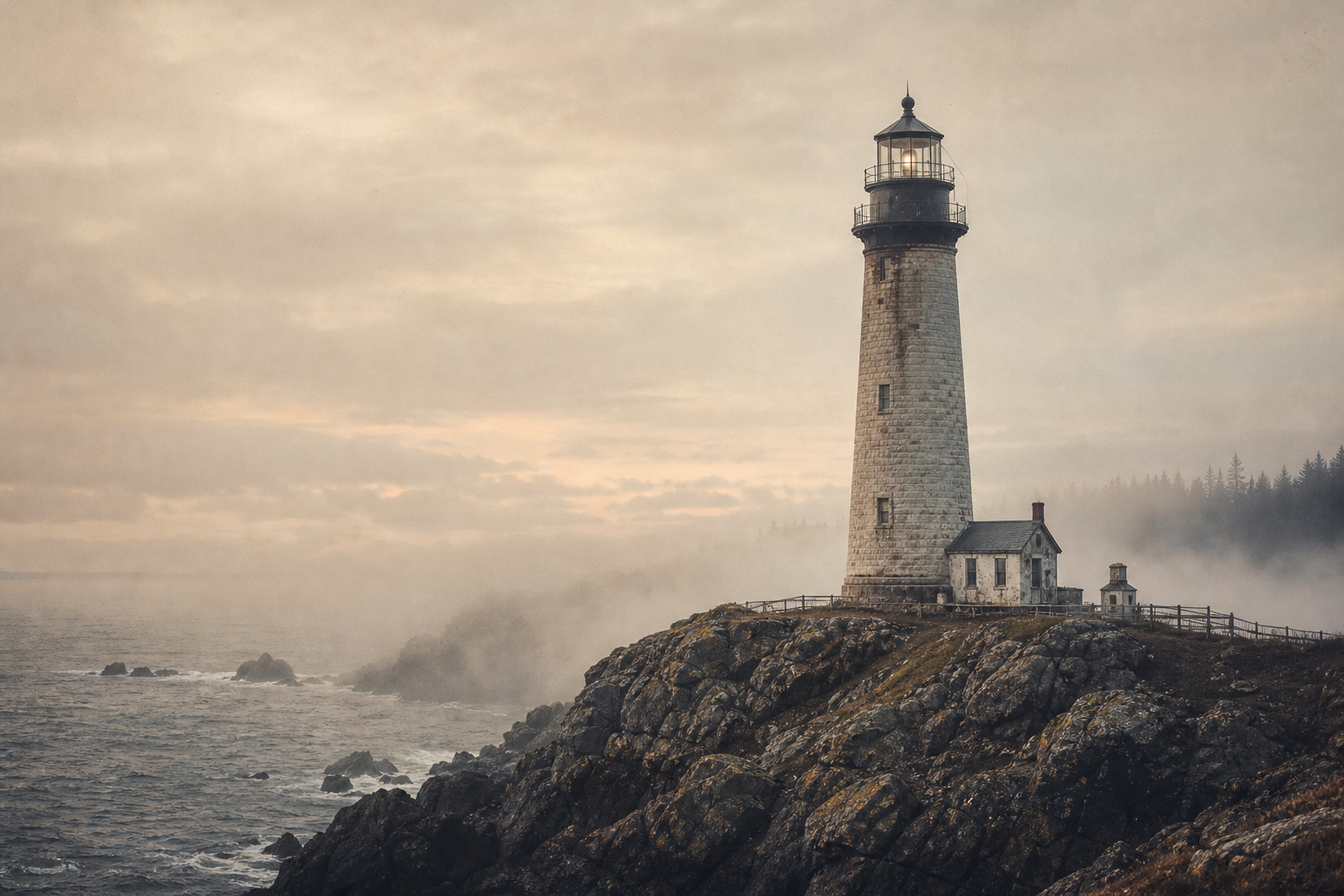
Archive plate · Lead frame
Granite shoreline and fog drift compress the tower into a quiet silhouette above the surf.
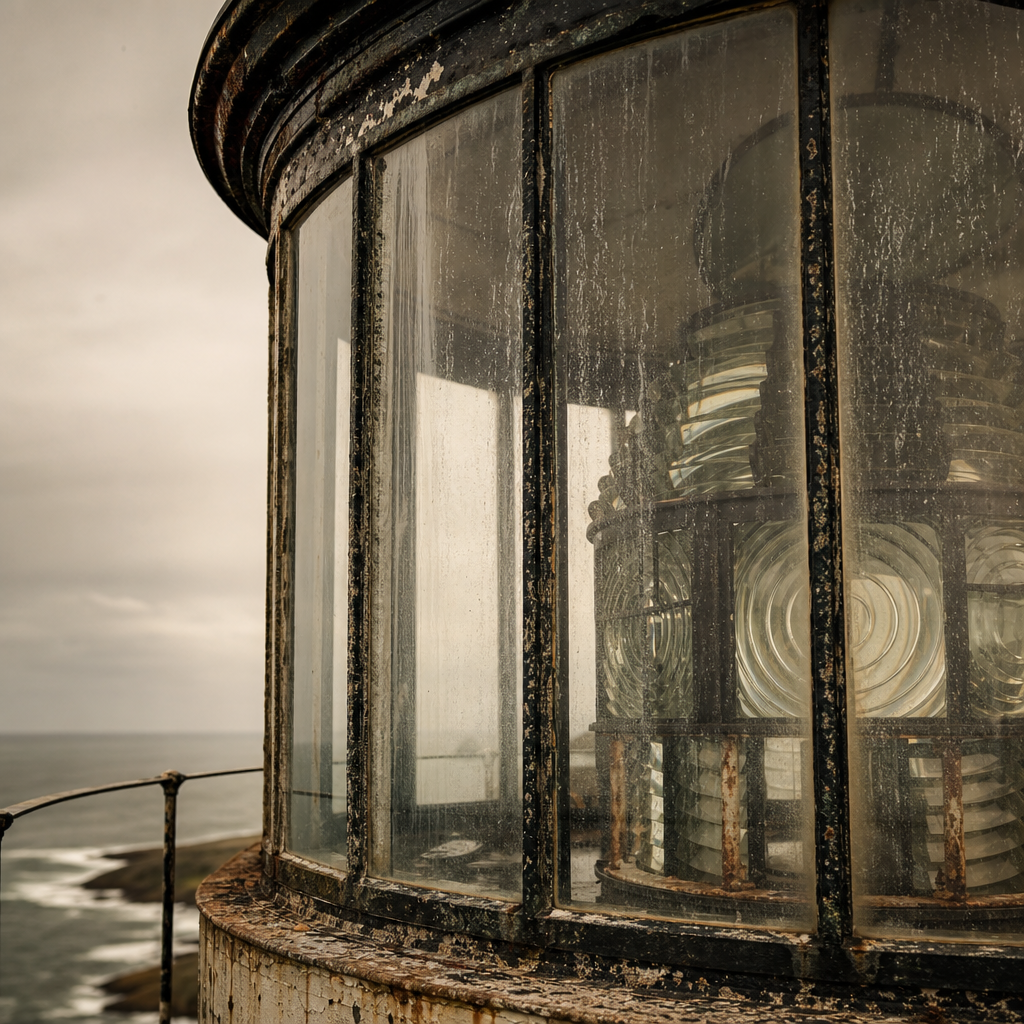
Detail card · Optics
Weathered glazing catches low light and reveals years of sea spray abrasion.
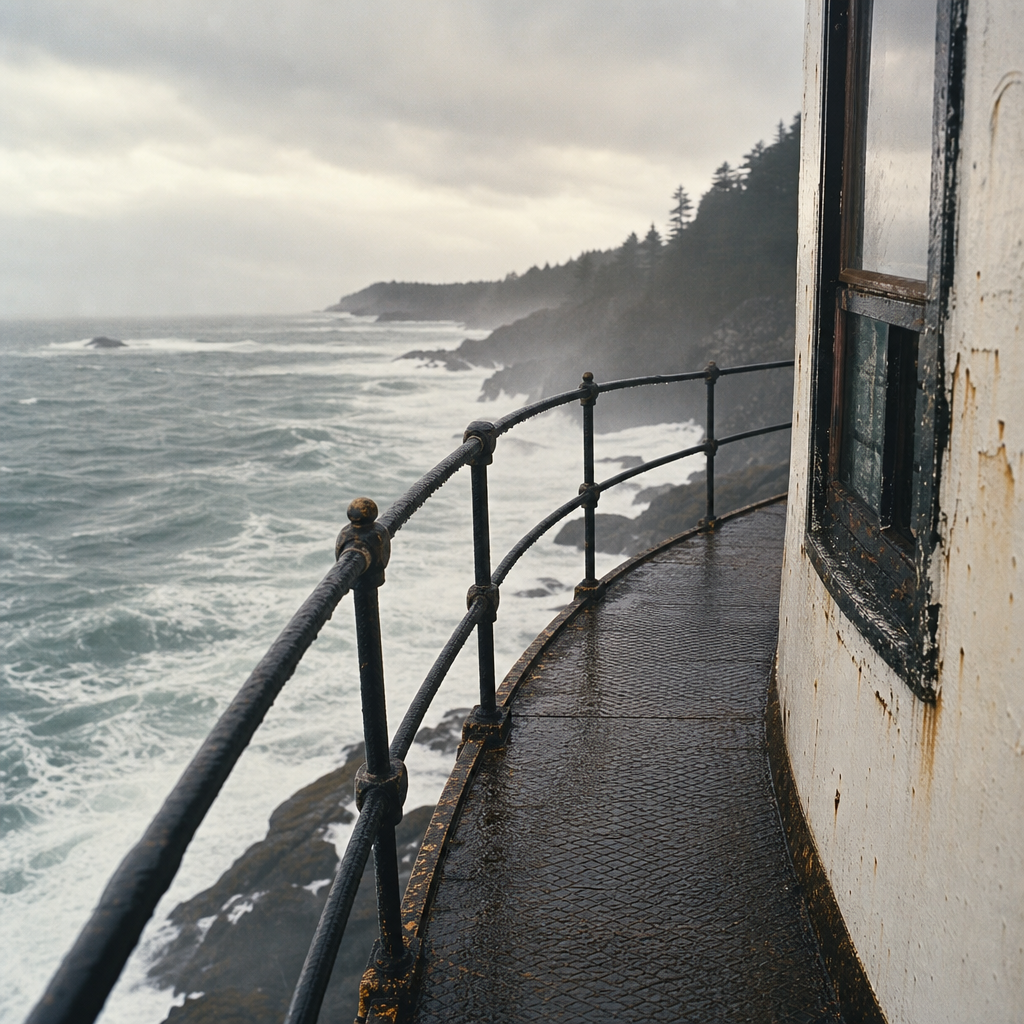
Keeper notes · Access
Narrow ironwork paths show the exposed daily route between lens and tower stair.
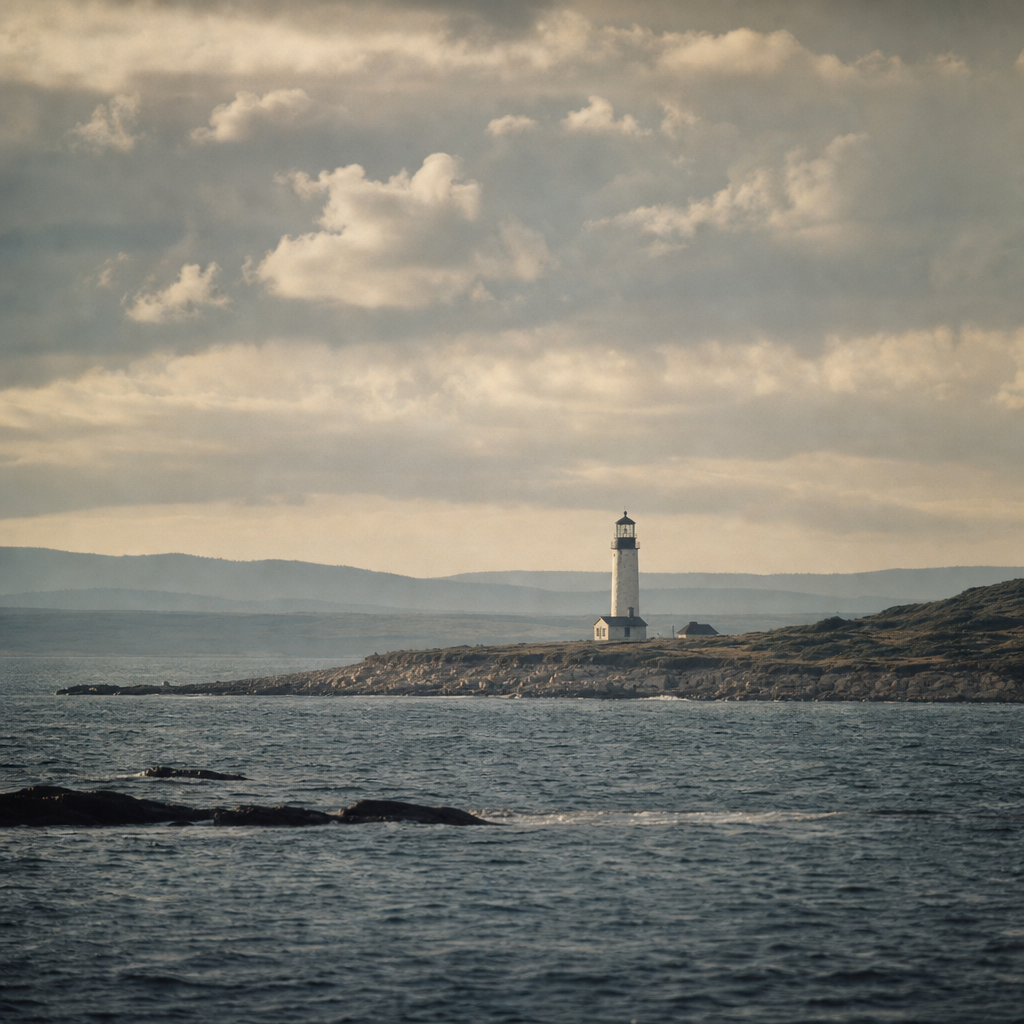
Survey frame · Horizon
A distant tower anchors the coast beneath layered cloud and muted afternoon water.
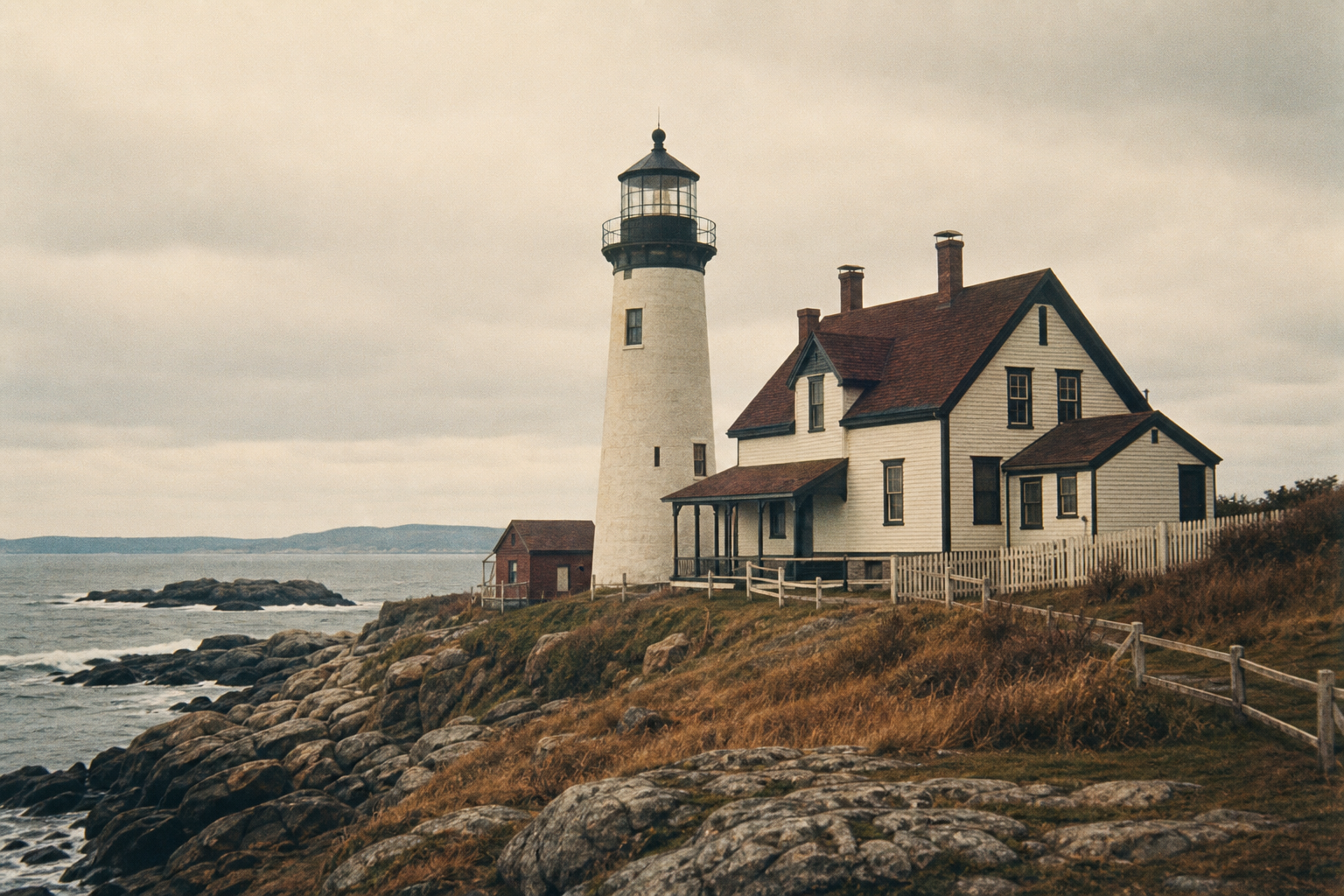
Site context · Dwelling
The residence and beacon appear as one working compound along the exposed shore.
Keeper Stories
Beyond the towers and charts, lighthouse history is made of routines, weather watches, and quiet duty carried by keepers on the edge of land and sea.
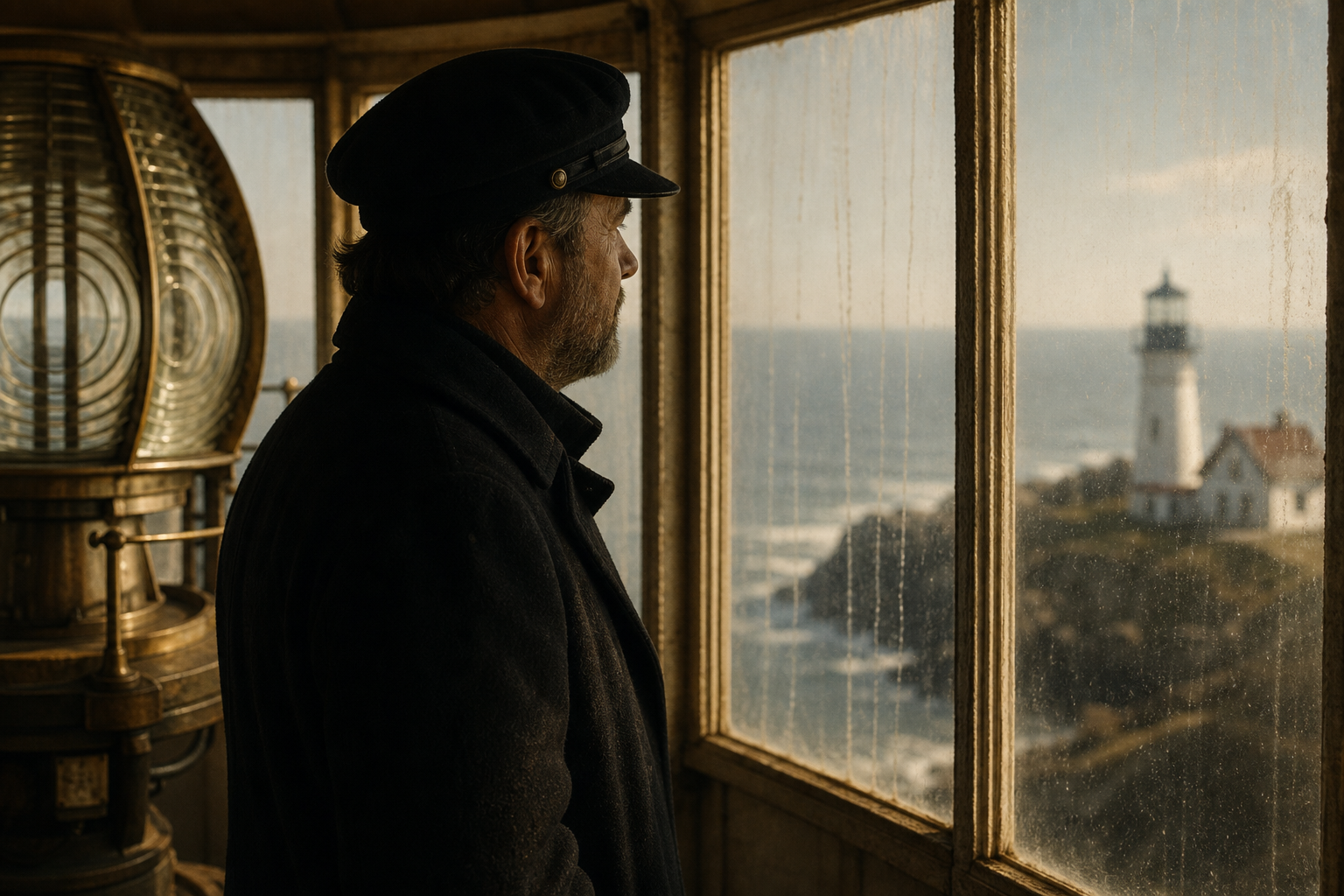
In winter months, keeper Ansel Reeve checked the lantern glass before dawn and logged each crackle of wind against the tower. His notes describe how even brief clearings could decide whether fishing boats returned safely to harbor.
“When the window cleared for a minute, that minute belonged to every mast outside.”
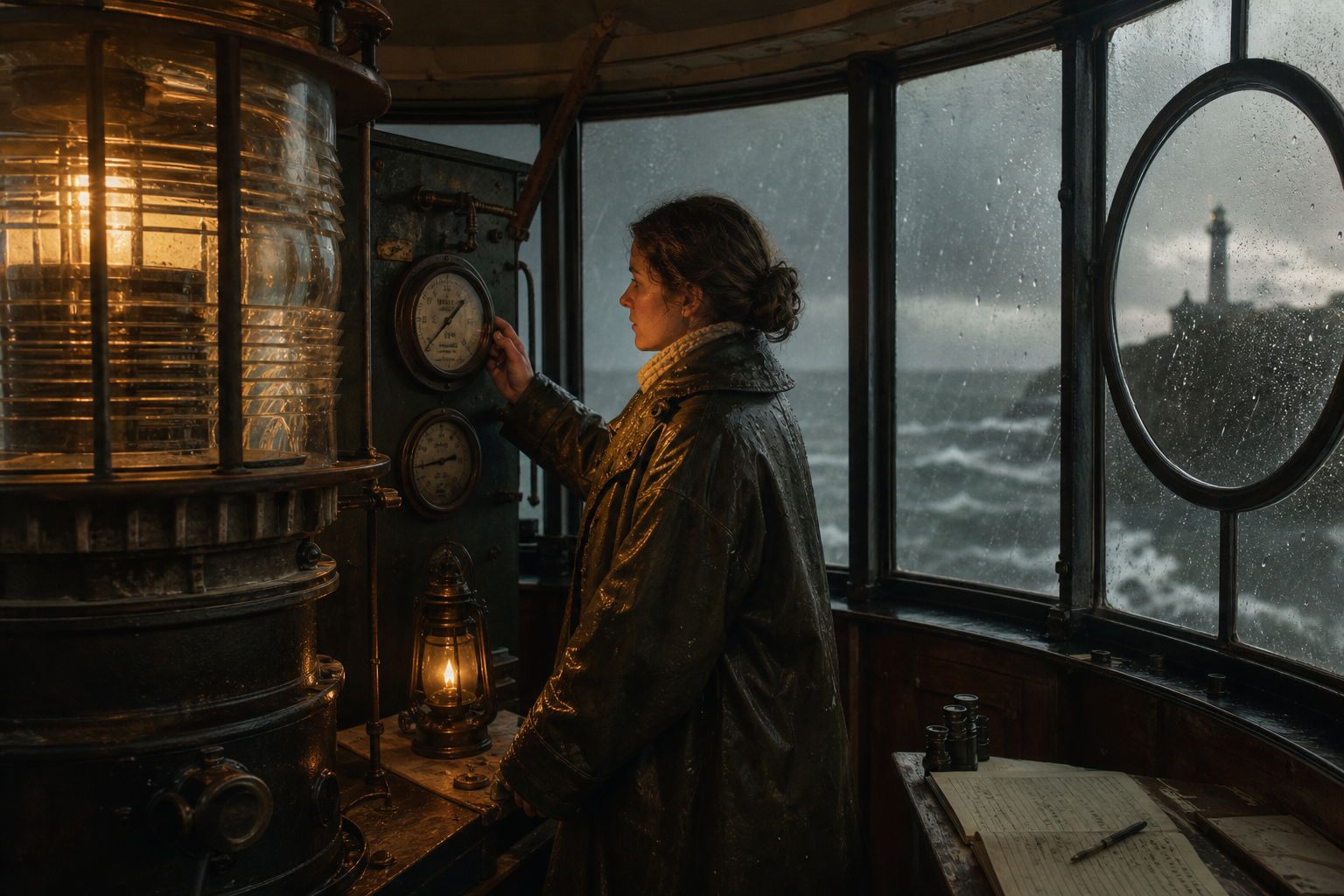
During the 1912 storm season, assistant keeper Mara Holt stayed on interior watch while waves struck the outer wall in repeating bursts. She timed each sweep, checked oil pressure by touch, and relayed wind shifts to the harbor office at first light.
“You learned the weather by sound first, then by what the lamp did with it.”
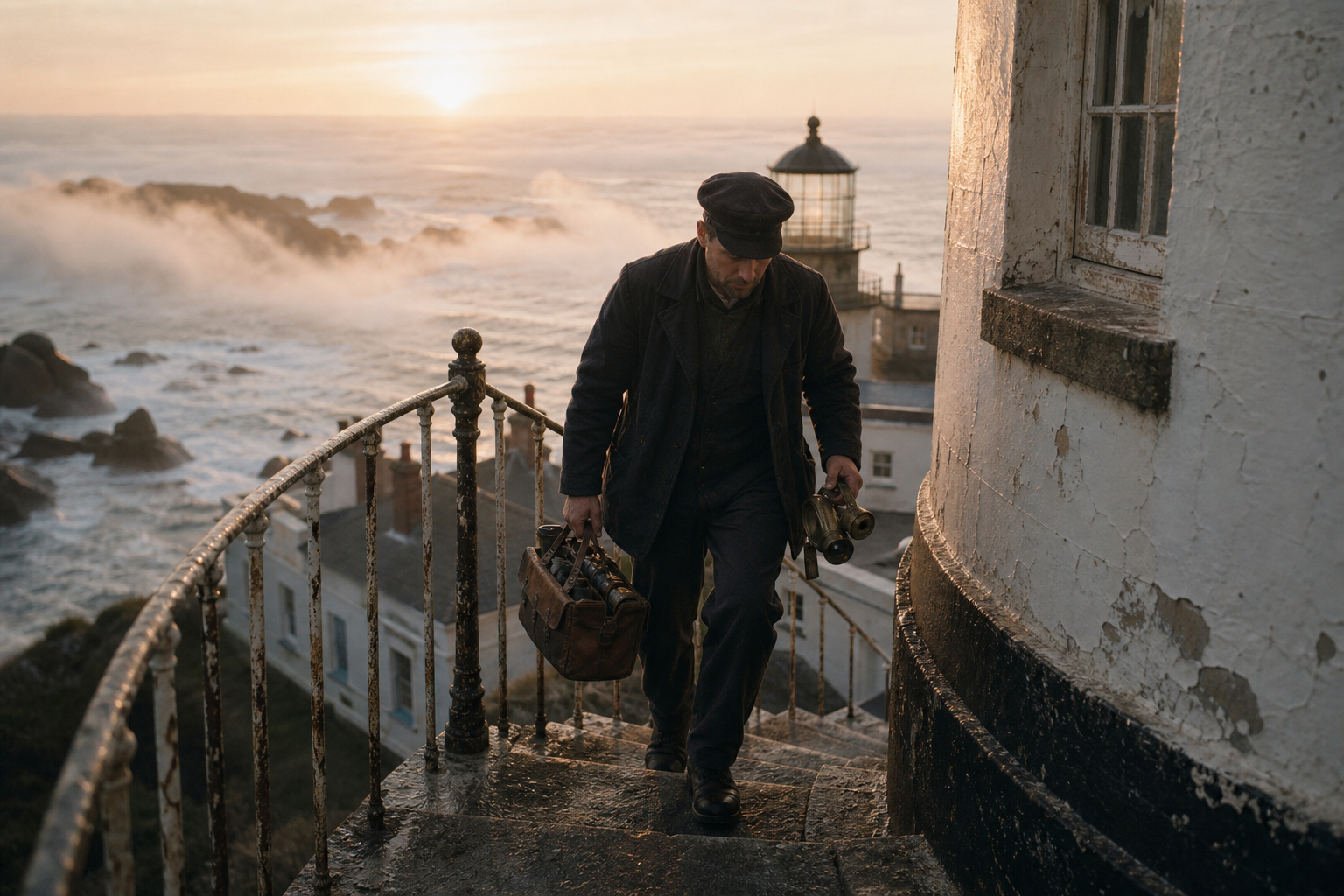
Each dawn, keeper Tomas Ivers walked the stone steps with a satchel of wicks, polish, and spare fittings before visitor boats appeared offshore. His records show maintenance as careful repetition: wipe, test, note, and leave the lens ready for dusk.
“If the morning work was quiet and exact, the evening light would speak for itself.”
Preserved tower orientation
A map-led overview of surviving towers, showing how preservation patterns shift from open headlands to sheltered harbor edges.
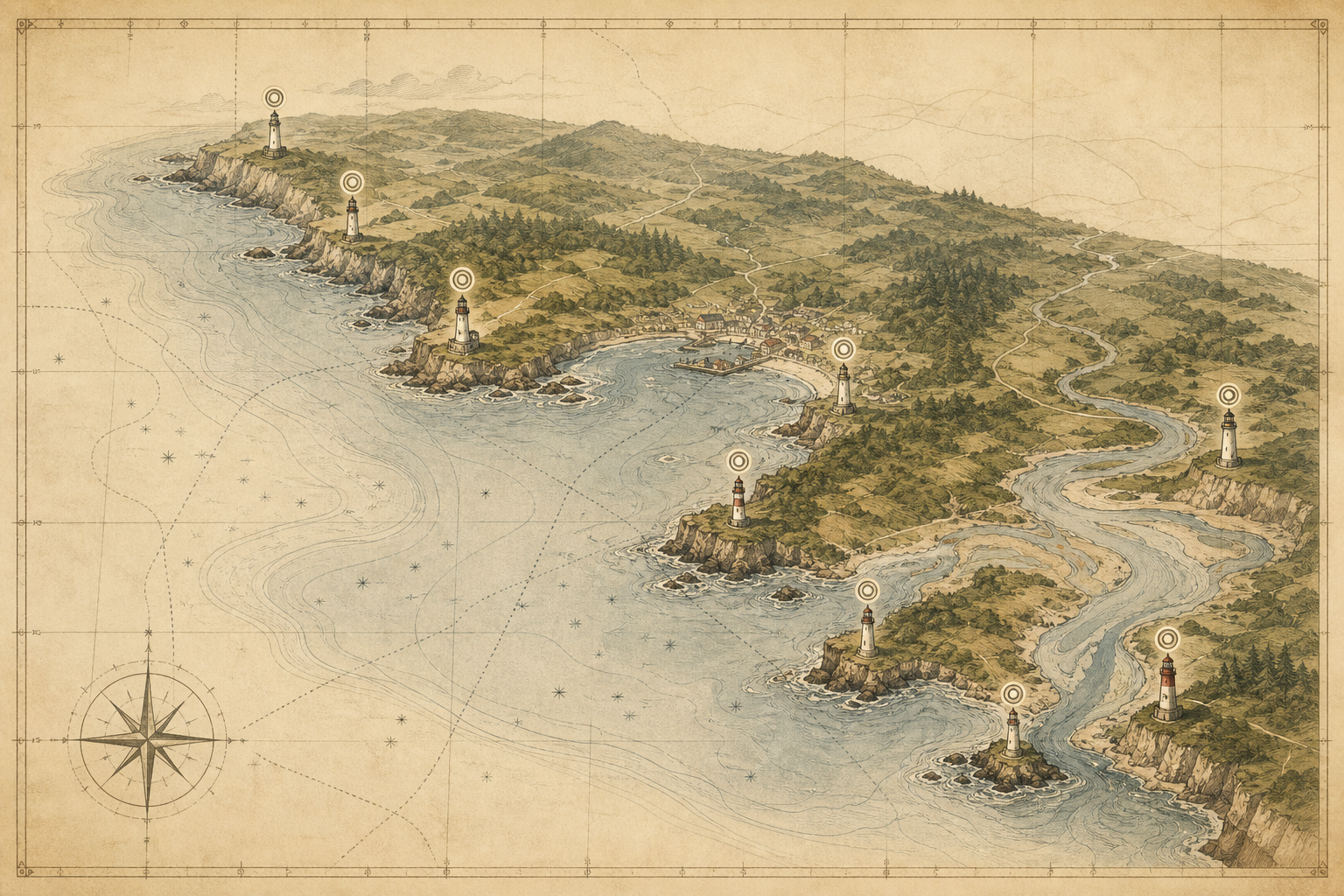
Illustrated reference only · marker placement reflects preservation clusters, not exact navigation coordinates.
Research notes
A short guide to scope, preservation language, and how archival material is framed across this exhibit.